

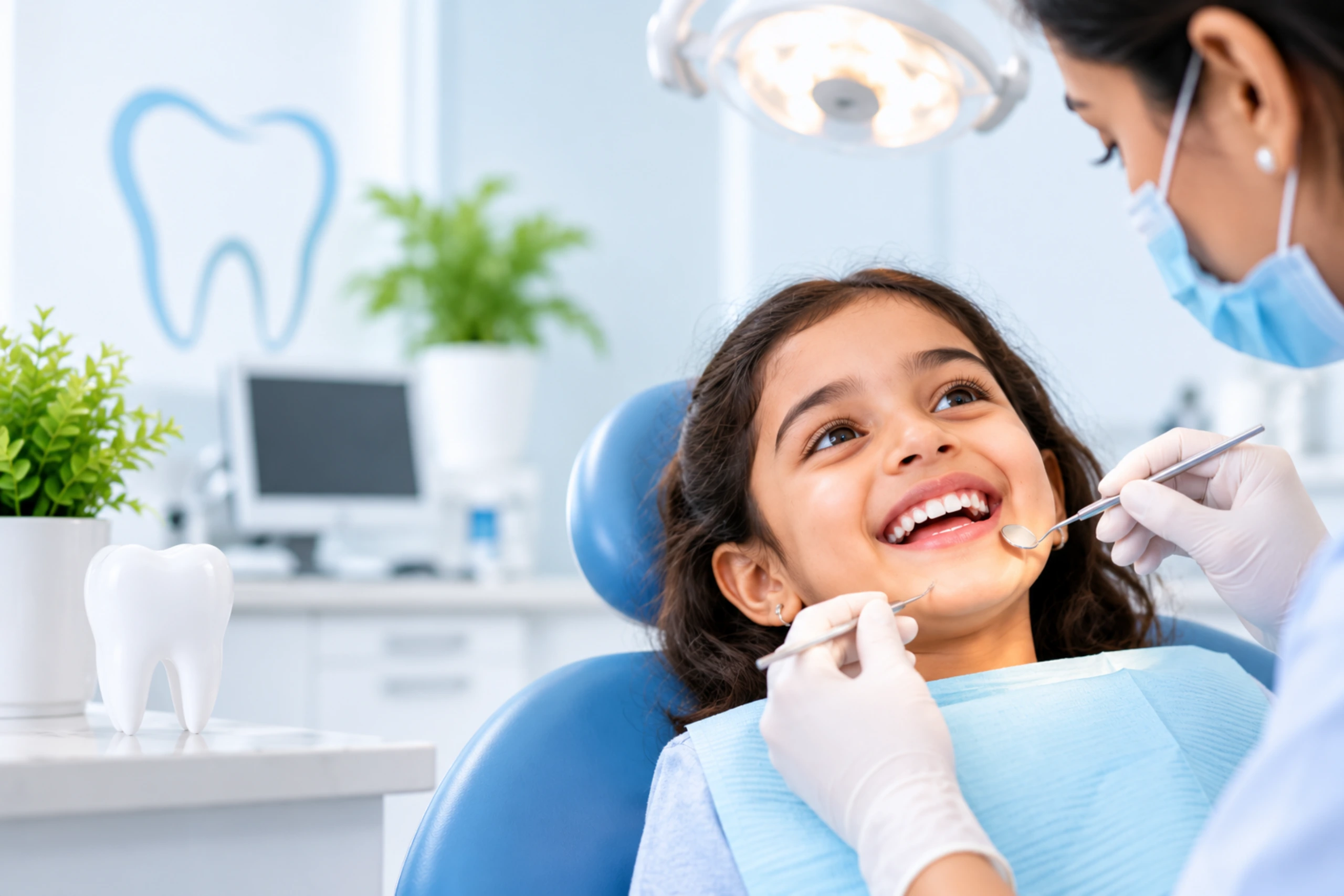
Many parents start looking for a pediatric dentist in Trivandrum only after a child complains of a toothache. By then a small cavity has often grown, and the first dental visit begins with pain instead of curiosity. The World Health Organization notes that tooth decay can begin as soon as the first teeth appear and often keeps children out of school. This guide covers what a pediatric dentist does, when children should start going, what the first appointment involves and how to choose a clinic.
What a Pediatric Dentist Does Differently
A pediatric dentist, known in India as a pedodontist, is a dentist with additional postgraduate training in children’s oral health. The difference lies in familiarity: they examine small mouths every day, follow how baby teeth give way to permanent ones, and know how to explain a procedure to a nervous five-year-old in plain words.
Is a specialist always necessary?
Not for every child. A general dentist can manage routine check-ups for many children. A pediatric dentist is worth seeking out for toddlers, for anxious children, for children who keep getting cavities and for those with special health needs.
When Should a Child First See a Dentist?
The first-birthday guideline
The American Academy of Pediatric Dentistry (AAPD) recommends that every child have a regular dentist by 12 months of age, an ongoing relationship rather than an emergency visit. That is earlier than most families expect. Starting early also makes regular children’s dental check-ups feel routine rather than frightening.
Signs that should not wait
Book an appointment sooner if you notice:
- White, brown or grey marks on the teeth
- Sensitivity to cold drinks or sweets, or a child who chews on one side only
- Swollen gums or swelling of the face
- A chipped, loosened or knocked tooth after a fall
What Happens at a Child’s First Dental Visit
A child’s first dental visit is mostly a conversation and a gentle look. The dentist checks teeth, gums and bite, asks about feeding, snacks, brushing and habits such as thumb-sucking, and shows parents how to clean small teeth. Younger children often sit on a parent’s lap for the examination. What happens depends on the child’s age and the clinic’s approach, so it is fair to ask what to expect when you book.
Everyday Care That Protects Baby Teeth
Baby teeth fall out, but they still help children chew and speak, and they guide the permanent teeth into position. Decay in them can cause pain and infection, which is why home care starts with the first tooth.
Toothpaste amounts by age
The American Dental Association and the UK’s NHS give matching advice on how much fluoride toothpaste to use:
|
Age |
Fluoride toothpaste |
Who brushes |
|
First tooth to age 3 |
A smear, about the size of a grain of rice |
A parent |
|
Age 3 to 6 |
A pea-sized amount |
A parent supervises |
Have the child spit out the toothpaste rather than rinse, because rinsing reduces how well the fluoride works. From age 7 the NHS advice is to brush at least twice a day for about two minutes.
Sugar and snacking
The WHO identifies free sugars as the most common risk factor for tooth decay and advises limiting them. Free sugars include sugar added to food and drink, plus honey, syrups and fruit juice. Frequent snacking and sipping sweet drinks keep teeth exposed to sugar for longer, so it helps to keep sweet foods to mealtimes and offer water between meals. For more on how cavities form in children, see our article on why kids get cavities.
Preventive Treatments a Pediatric Dentist May Recommend
A pediatric dentist may suggest extra protection depending on a child’s risk of decay. Dental sealants are thin coatings placed on the grooves of back teeth, and an ADA and AAPD guideline found them effective at preventing and arresting decay in those grooves. Fluoride varnish is a concentrated fluoride coating applied by a professional, and the US Preventive Services Task Force recommends it for children under 6 from the first tooth. Whether either suits your child depends on the dentist’s assessment.
Crowding and bite problems are often first noticed at a routine visit. Clear aligners are generally planned once the permanent teeth have come in, and Dental Home’s own clear aligners page says suitability for teenagers is assessed at the first consultation.
Choosing a Pediatric Dentist in Trivandrum
When you are choosing a pediatric dentist in Trivandrum, the title matters less than how the clinic works with children and how easy repeat visits are. Questions worth asking before you book:
- Is there a dedicated pediatric dentist, and on which days are they available at the branch nearest me?
- Which preventive treatments do you offer, and how do you decide which children need them?
- How do you help a child who is anxious or refuses to open their mouth?
- What should I do if my child has a dental injury or severe pain outside appointment hours?
- Will I receive a written estimate before any treatment starts?
For a broader checklist that applies to any clinic, see our guide to choosing a dental clinic in Trivandrum.
Pediatric Dental Care at Dental Home Dental Care
Parents comparing options for a pediatric dentist in Trivandrum can see how Dental Home Dental Care approaches it. The clinic lists pediatric dental care among its treatments, covering cavity prevention and treatment, gum problems and dental injuries, alongside routine check-ups. Its team page lists Dr Sujith as Consultant Pedodontist (Pediatric Dentist), together with consultants in orthodontics, endodontics and oral and maxillofacial surgery. The clinic has three branches, in Malayinkeezh, Kattakada and Jagathy, and addresses and hours are on the clinics page. Because specialist days can differ between branches, confirm availability when you book.
This article is general information. A dentist’s assessment of your child always comes first.
Frequently Asked Questions
- At what age should my child first see a dentist?
Dental associations such as the AAPD advise scheduling a child’s first dental visit when the first tooth appears and no later than the first birthday. - Do baby teeth need treatment if they will fall out anyway?
Yes, because untreated decay in baby teeth can cause pain and infection and may affect the permanent teeth coming in. - How much toothpaste should a toddler use?
Use a smear of fluoride toothpaste, about the size of a grain of rice, until age 3, then a pea-sized amount until age 6. - How is a pedodontist different from a general dentist?
A pedodontist has additional postgraduate training in children’s dental care, while a general dentist treats patients of all ages. - How often should my child have a dental check-up?
Your dentist sets the interval from your child’s risk of decay, and every six months is a common starting point for children’s dental check-ups. - What if my child is afraid of the dentist?
Choose a calm first appointment, describe the visit in simple words beforehand and tell the dentist about the fear when you arrive. - What are dental sealants for children?
They are thin protective coatings placed on the grooves of back teeth to help prevent decay. - Does Dental Home Dental Care have a children’s specialist?
Anyone looking for a pediatric dentist in Trivandrum at Dental Home can note that the team page lists Dr Sujith as Consultant Pedodontist, and calling ahead confirms his availability. - What should I do if my child knocks out a tooth?
Call a dentist straight away, and if it is a permanent tooth, keep it moist, hold it by the crown and get to the dentist immediately. - How much does children’s dental treatment cost?
The cost depends on the treatment needed, so a clinic can only give an accurate estimate after examining your child.